If you ever sit in front of your TV on a chilly January morning and watch the tricolour rise above Kartavya Path, you probably feel a sudden wave of pride. Because the scene looks powerful and emotional, you may also wonder what truly makes 26 January so special for India. Therefore, in this article, you will understand what Republic Day of India is, why India celebrates it, on which date it falls, and how every detail of this day connects to the story of the Constitution. Moreover, everything is explained in very simple language so that every reader can follow each point without any confusion.
What Is Republic Day Of India
First of all, Republic Day is a national festival of India that celebrates the enforcement of the Constitution of India on 26 January 1950. Instead of just being another holiday, it marks the exact day when India changed from a British dominion to a sovereign, democratic republic. Therefore, Republic Day represents the moment when India decided to run the country according to rules written by Indians themselves.
Moreover, before this day, India used the Government of India Act 1935, which came from the British period. As a result, the laws did not fully match the dreams of an independent nation. Because of this gap, the leaders of India felt that the country needed a new guiding document. Consequently, they created the Constitution and linked its enforcement to 26 January.
Key points about what Republic Day is
-
It marks the day when the Constitution of India came into effect
-
It celebrates India becoming a sovereign, democratic republic
-
It highlights the role of citizens in choosing their government
-
It reminds people that the Constitution is the supreme law of the land
-
It honours the leaders who drafted and adopted the Constitution
Why India Celebrates Republic Day
Although India became independent on 15 August 1947, the journey towards becoming a full republic took some more time. Therefore, understanding why India celebrates Republic Day means understanding what happened between 1947 and 1950.
Formation Of The Constituent Assembly
Right after independence, Indian leaders formed the Constituent Assembly. This body took responsibility for drafting the new Constitution. Because the task was huge, they created a Drafting Committee with Dr. B.R. Ambedkar as its Chairman. Moreover, leaders like Jawaharlal Nehru, Dr. Rajendra Prasad, Sardar Vallabhbhai Patel, and Maulana Abul Kalam Azad contributed to shaping the document.
Almost Three Years Of Hard Work
The Assembly did not rush the process. Instead, it discussed, debated, and revised the draft for 2 years, 11 months, and 18 days. Therefore, every article of the Constitution went through serious thinking and careful review. As a result, India received one of the most detailed written constitutions in the world.
Adoption Of The Constitution
The Constituent Assembly adopted the Constitution on 26 November 1949. However, the leaders still wanted a date with deep emotional value to bring it into force. Consequently, they selected 26 January.
Why 26 January Was Chosen
India chose 26 January to honour the historic declaration of Purna Swaraj. On 26 January 1930, the Indian National Congress had called for complete independence from British rule. Therefore, by enforcing the Constitution on the same date twenty years later, India connected the dream of total freedom with the reality of becoming a republic.
India Becomes A Republic
On 26 January 1950, the Constitution came into effect and India officially became a republic. From that day onward, the President of India became the head of state, and the people received fundamental rights and a democratic structure. Therefore, India celebrates Republic Day every year to remember this historic transformation.
On Which Date India Celebrates Republic Day
India celebrates Republic Day every year on 26 January. Because the date comes from a historic decision related to Purna Swaraj and the enforcement of the Constitution, it never changes. Moreover, it is one of the three national festivals of India, along with Independence Day (15 August) and Gandhi Jayanti (2 October).
How India Celebrates Republic Day
Grand Parade At Kartavya Path, New Delhi
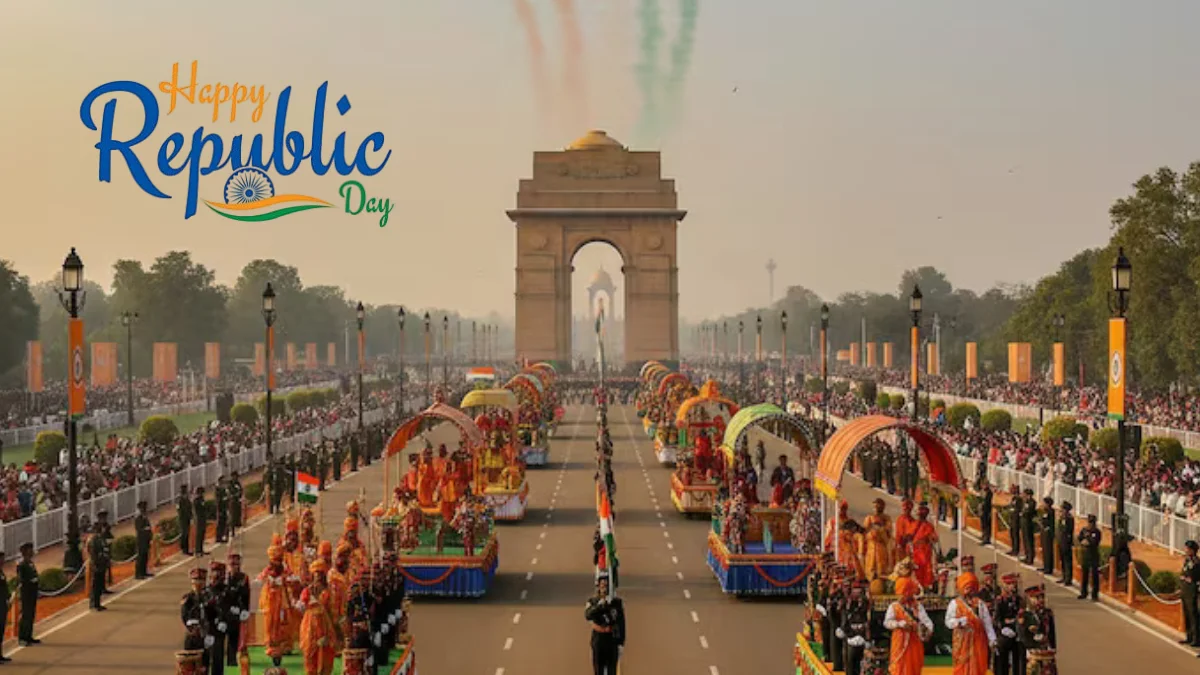
Every year, the main Republic Day celebration takes place in New Delhi at Kartavya Path. During this event, the President of India receives a ceremonial salute, and the national flag is unfurled. Moreover, the parade showcases marching contingents of the Army, Navy, and Air Force, along with bands, military equipment, and state tableaux.
Because the event attracts global attention, India also invites a foreign Chief Guest, which shows the country’s strong diplomatic ties. In addition, cultural performances and school children’s programs add colour and life to the celebration.
State And Local Celebrations Across India
Apart from the main parade in Delhi, states and union territories organise their own Republic Day functions. Therefore, people attend flag hoisting ceremonies in schools, offices, and public grounds. Moreover, patriotic songs, speeches, and cultural programs help citizens feel connected with the values of the Constitution.
Gallantry Awards And Honours
Every year, the Government of India presents gallantry awards to brave soldiers and civilians. These awards include:
-
Param Vir Chakra
-
Ashoka Chakra
-
Kirti Chakra
-
Shaurya Chakra
Because these honours highlight courage and sacrifice, they inspire citizens to serve the nation in their own ways.
Beating Retreat Ceremony
On 29 January, the Beating Retreat Ceremony marks the formal end of the Republic Day celebrations. During this program at Vijay Chowk in New Delhi, military bands play patriotic tunes as the evening sky fills with music and discipline. Therefore, the ceremony provides a graceful and dignified closing to the national festival.
Important Verified Facts About Republic Day
To keep everything accurate, it is important to list the major facts clearly. Therefore, you can remember the following points:
-
Constitution adopted on 26 November 1949
-
Constitution enforced on 26 January 1950
-
India became a sovereign, democratic republic on that day
-
Dr. B.R. Ambedkar chaired the Drafting Committee
-
Dr. Rajendra Prasad became the first President of India
-
26 January chosen to honour Purna Swaraj Day of 1930
-
Republic Day is a national holiday across India
Official Government Website Links
Because you may want to double-check details or explore more information, you can visit these official portals:
-
National Portal of India: https://india.gov.in
-
Ministry of Defence: https://mod.gov.in
Both websites provide authentic, government-approved information related to India and its national events.
Conclusion
In conclusion, Republic Day of India is not just about parades, school programs, or a day off from work. Instead, it is the living reminder of the moment when India trusted its own Constitution and moved fully into a democratic future. Because 26 January connects Purna Swaraj, independence, and the enforcement of the Constitution, the date holds deep emotional and historical value. Therefore, every year, when the tricolour rises and the anthem echoes across the country, people remember that their rights, freedoms, and responsibilities all come from that single, powerful decision made in 1950.
For More Information Click HERE